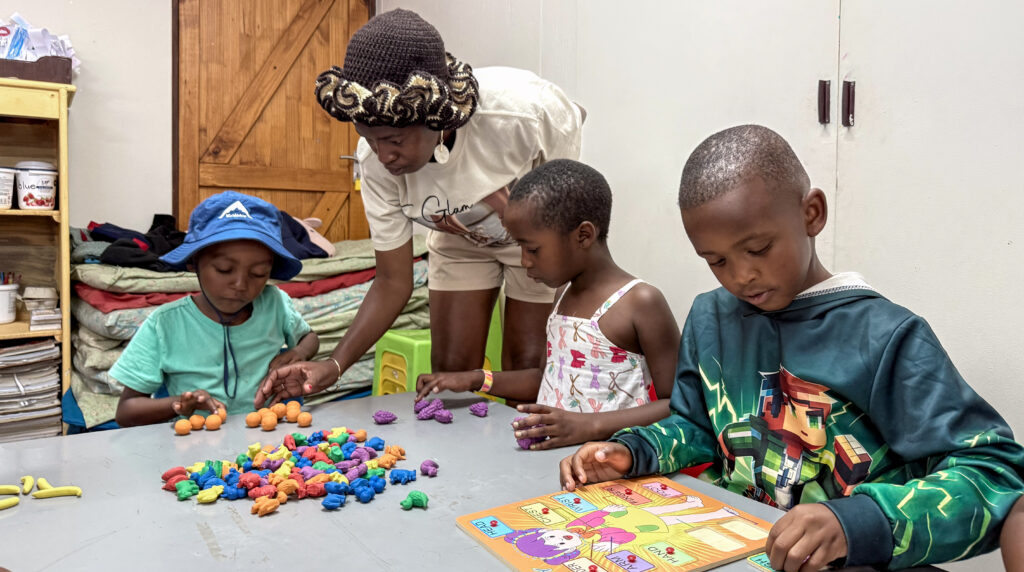
For 33 years, the Knysna Education Trust has worked within the Greater Knysna area — and one thing has grown clearer with time: early childhood development here is not a set of centres that KET supports from above. It is a connected web — principals, practitioners, parents, churches, clinics, local businesses, Rotary and other civil-society organisations, other NGOs, the municipality, and KET — where every part depends on the others.
KET is one node in that web. A helpful one, but not the most important. The centres, and the principals who lead them, are the heart of the system: they keep doors open, feed children, and hold communities together through every kind of shock. Our role is not to stand at the centre, but to connect, strengthen, and help fill the gaps no single part can fill alone.
It helps to be clear about what this web is made of. South Africa has no public early childhood development system. Unlike schools, there are no government-run ECD centres; the state regulates and part-funds the sector but does not operate it.
Instead, there are thousands of small centres run privately as micro-businesses — and the overwhelming majority were started and are run by women, often from their own homes. KET is not government either. We are a civil-society organisation that invests in this work because the early years are one of the soundest investments our community and country can make. In the absence of a public system, this web is the system — held together by relationships, not by any central authority. That is why connecting and strengthening it matters so much.
Working in partnership
Any ECD centre in the municipality can apply to become a KET partner, though our support flows mainly to centres serving children in Knysna’s most disadvantaged communities, where the need is greatest. A partner centre commits with an annual fee of R140 — nothing next to the support it receives, but a real symbol of the partnership.
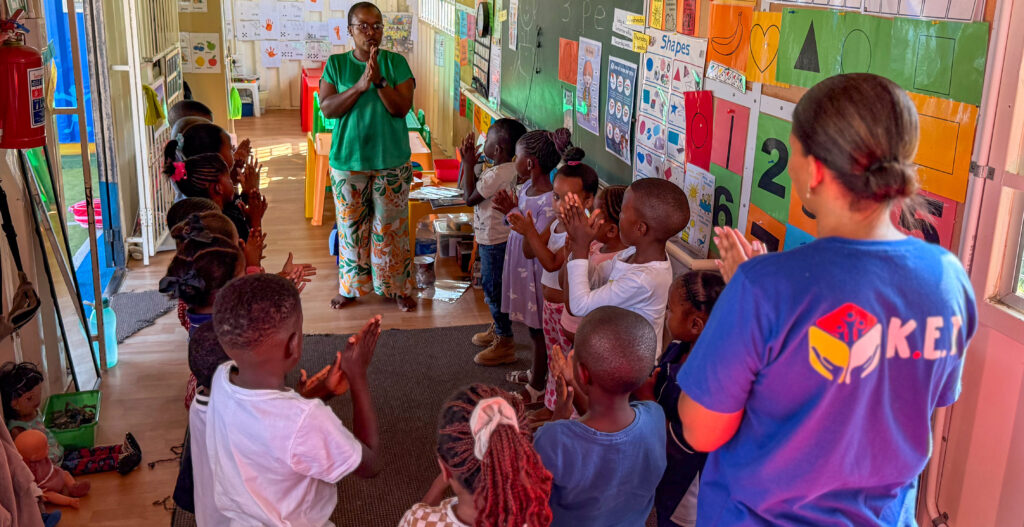
Each centre is paired with a Preschool Area Lead (PAL) — a shoulder to lean on for pedagogy — and sends principals and practitioners to bi-monthly workshops: governance and sustainability for principals, classroom practice for practitioners. For those who want a formal qualification, we offer NQF Level 1 and Level 4 ECD training, funded through bursaries.
Equity, not equality
We do not treat our 75 partner centres equally; we treat them equitably. Equality means giving everyone the same thing; equity means giving each centre what it needs to reach the same standard. A well-resourced centre does not need what a struggling one in a vulnerable community needs, and identical support would waste donor money on the strong and fail the weak.
So we assess — continually, and with data — building a picture of where each centre stands across pedagogy, environment, and governance, then shaping a support plan around that centre alone. If our work has taught us anything, it is that there is no recipe: what moves one centre forward can be the wrong starting point for another. Stronger centres often mentor others, and our deepest support goes where the need is greatest — which is how a small organisation moves the whole system forward instead of spreading itself so thin that nothing changes anywhere.
The same logic shapes the further programmes we run for the centres that need them most:
- Adopt a Centre for Excellence (ACE) offers temporary financial support to centres in the most vulnerable communities until they reach the registration milestone that unlocks a government subsidy. There is almost always a waitlist — the limit is funding, not need.
- The Feeding Scheme covers centres’ food costs, fully or partially (through a protein supplement), depending on the facility’s financial position.
- Blocks for Growth, a government-funded therapeutic programme for children behind on their developmental milestones, may only run in silver-rated sites, with an annual cap on sites and children.
- Infrastructure small-grants help under-resourced centres meet building and safety standards for registration. Rather than upgrades being done to a centre, principals apply, draw on local volunteer infrastructure advisors, manage approved providers, and see the work through — building skills that outlast the grant.
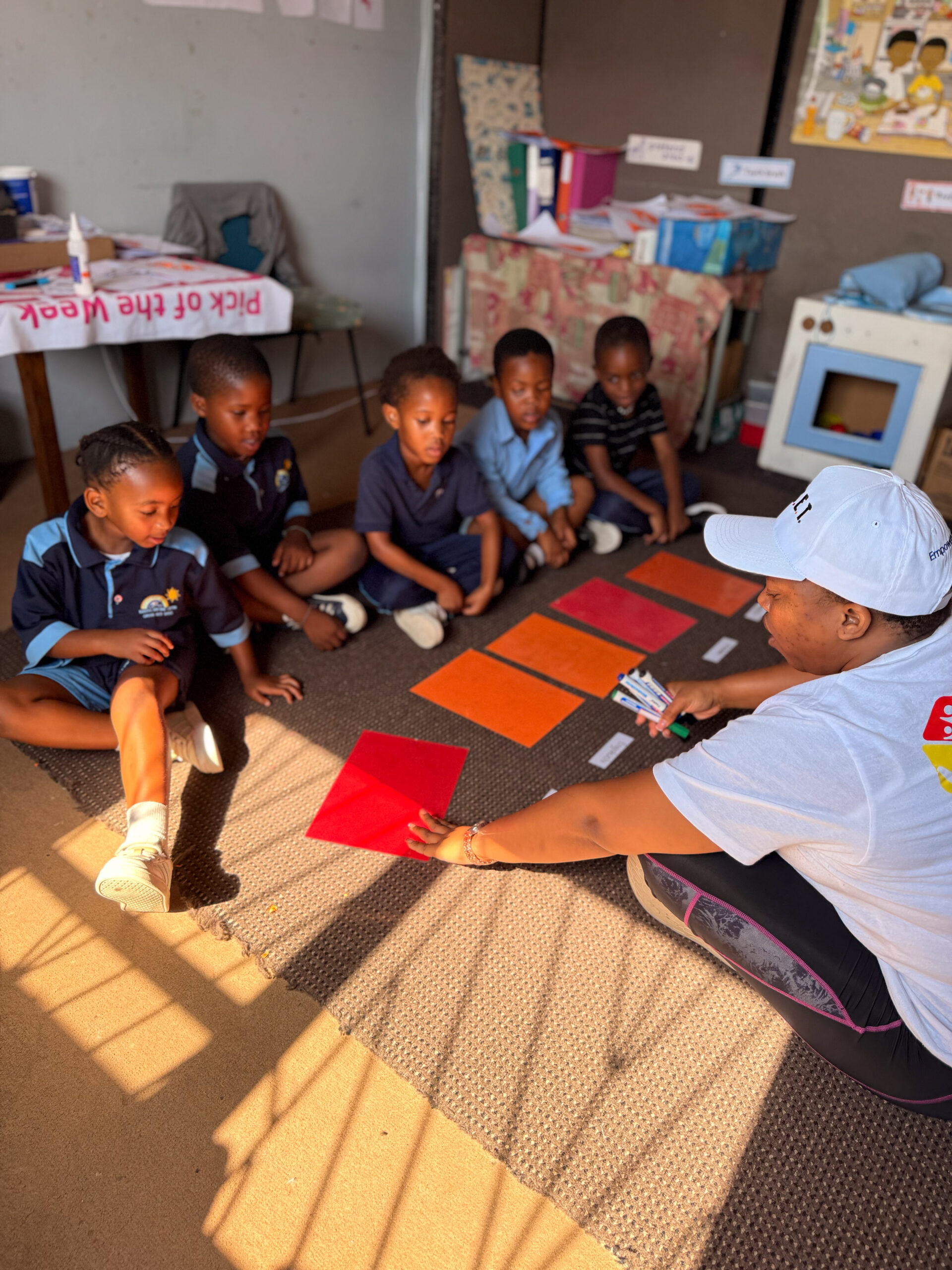
The work we are mandated to do
One part of our work does not depend on partnership. The Western Cape Education Department mandates KET to help every centre in the municipality comply with the Children’s Act and work towards registration. Here, centres have no choice about cooperating with us — it is the law, and the law exists to protect children. Our registration team has not only the right but the duty to assess any centre’s compliance.
Why it matters
Our theory of change rests on one outcome: every child in the Knysna area ready for school by six, with particular focus on children from disadvantaged backgrounds. Nobel laureate economist James Heckman has shown this to be among the highest-return investments a society can make.
But you cannot get a whole generation school-ready by working only with the easy centres, or from any single point in the system. Strong principals and dense networks keep centres alive, yet survival is not the same as quality; networks act as social insurance but do not, on their own, transform children’s outcomes. That takes many nodes pulling together — health, education, social development, faith communities, business, donors, and government, alongside the principals who anchor it all.
KET’s contribution is to hold those connections together and keep the gaps in view. Partners where we’re invited. Present where we’re mandated. Honest about where the need is greatest — and about what we cannot do alone. This is not charity. It is citizenship.