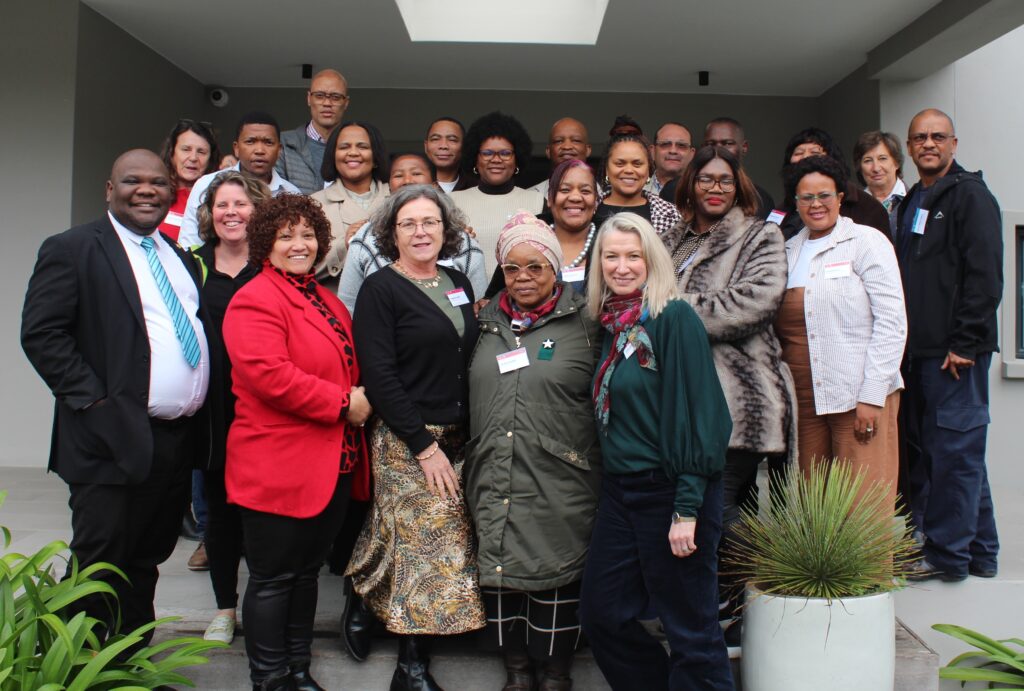
In collaboration with the Knysna Municipality, we hosted and organised a Municipal Early Childhood Development Planning Day on Thursday, 17 September 2026. The gathering, funded by the DG Murray Trust (DGMT), brought together municipal officials, provincial government, ECD practitioners, and civil society partners under one roof for the first time to chart a coordinated path forward for early learning in Knysna.
Some 89 early learning facilities operate across the greater Knysna area, serving roughly 3,000 children aged nought to five — the large majority in lower-income communities. Executive Mayor Thando Matika opened the day by throwing his weight behind KET’s work, encouraging every stakeholder in the room to do what they could to enable, rather than obstruct, ECD centres. He raised the difficult reality facing the sector: how poorly practitioners are paid, and how KET regularly trains and loses skilled staff to other industries.
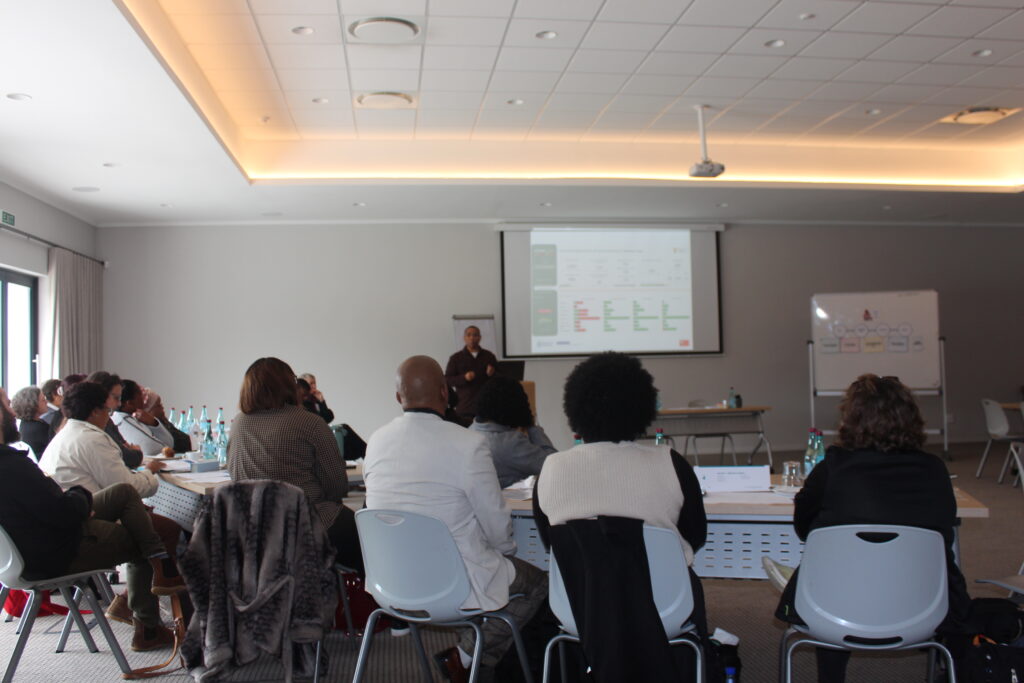
Christo Titus, Deputy Director for ECD at the Western Cape Education Department (WCED), presented the provincial picture. He outlined the shift to the eCares registration system, which has cut registration turnaround from six months to as little as a day, and detailed the bronze-silver-gold framework now driving compliance support rather than punitive enforcement. Titus reminded stakeholders that ensuring every child gets an equal opportunity to be school-ready is a shared responsibility — government, NPOs and corporates alike. He also confirmed that subsidies have risen from R17 to R24 per child per day for centre-based care, with a further R5 billion earmarked provincially for subsidisation in the year ahead. Notably, centres can only access this subsidy if they are registered on silver level, which requires health reports, floor plans, and health and safety compliance documents. The day traced the real-world impact of these systems through the stories of local principals, including the journey of two Knysna centres that took eleven and fifteen years respectively to move from informal, unregistered operations to registered, subsidised status — illustrating how long it can take centres to get together the documentation needed, due to financial restraints or lack of confidence to navigate official avenues.
By the close of the day, stakeholders had reached agreement — in principle — on three commitments to take the work forward:
- A revision of Knysna’s 2011 ECD policy, moving it from a purely regulatory document focused on land-use restrictions to one that actively enables early learning, in line with the National Integrated ECD Policy and the precedents set by municipalities such as Cape Town and Saldanha Bay.
- The establishment of a quarterly Knysna ECD Forum, bringing together the Municipality, KET, provincial departments, and sector partners as a standing structure for coordination and accountability.
- The co-design of a shared, public-facing ECD dashboard, drawing together registration, compliance and outcomes data from every partner. DGMT has committed to funding the dashboard’s development.
Johnny Douglas, Director of Community Services at Knysna Municipality, closed the day by noting that these commitments will need to be carried through Council via the municipality’s formal policy review process, including a Section 80 committee workshop with stakeholders, before any changes are adopted.
Knysna’s ECD sector is considered well ahead of many comparable municipalities, with KET currently partnering with 69 of the area’s 75 lower-income centres. Thursday’s day was, participants agreed, a significant step toward turning that groundwork into lasting municipal commitment.